Nexus Market Architecture
An objective analysis of the Nexus Onion Link infrastructure, exploring its historical uptime, security protocols, and decentralized marketplace features. This report details the technical evolution of the platform within the Tor network.
Executive Summary
Nexus Onion Link functions as a hidden service operating exclusively on the Tor network. Established as a response to the vacuum left by previous market closures, the platform differentiates itself through a "Walletless" payment architecture and a strict focus on operational security (OpSec). Unlike traditional escrow systems that hold funds in central wallets, Nexus employs a direct transfer protocol designed to minimize the risk of exit scams or seizure of centralized funds.
The platform supports major cryptocurrencies including Bitcoin (BTC), Monero (XMR), and Litecoin (LTC), with a strong community preference for Monero due to its privacy-enhancing ring signature technology.
Technical Specifications
Security Protocol
- > 2FA via PGP
- > End-to-End Encryption
- > Anti-DDoS layers
- > No Javascript req.
Currency Support
- > Monero (XMR) [Priority]
- > Bitcoin (BTC) [SegWit]
- > Litecoin (LTC)
- > Auto-Exchange
Infrastructure
- > Tor V3 Onion Services
- > Distributed Mirrors
- > 60s Auto-Logout
- > Canary Warrant System
Interface Analysis
The following visual data points represent the standard user interface flow within the Nexus environment.
Access Control
Initial CAPTCHA and DDoS mitigation layer commonly presented before the main login gateway.
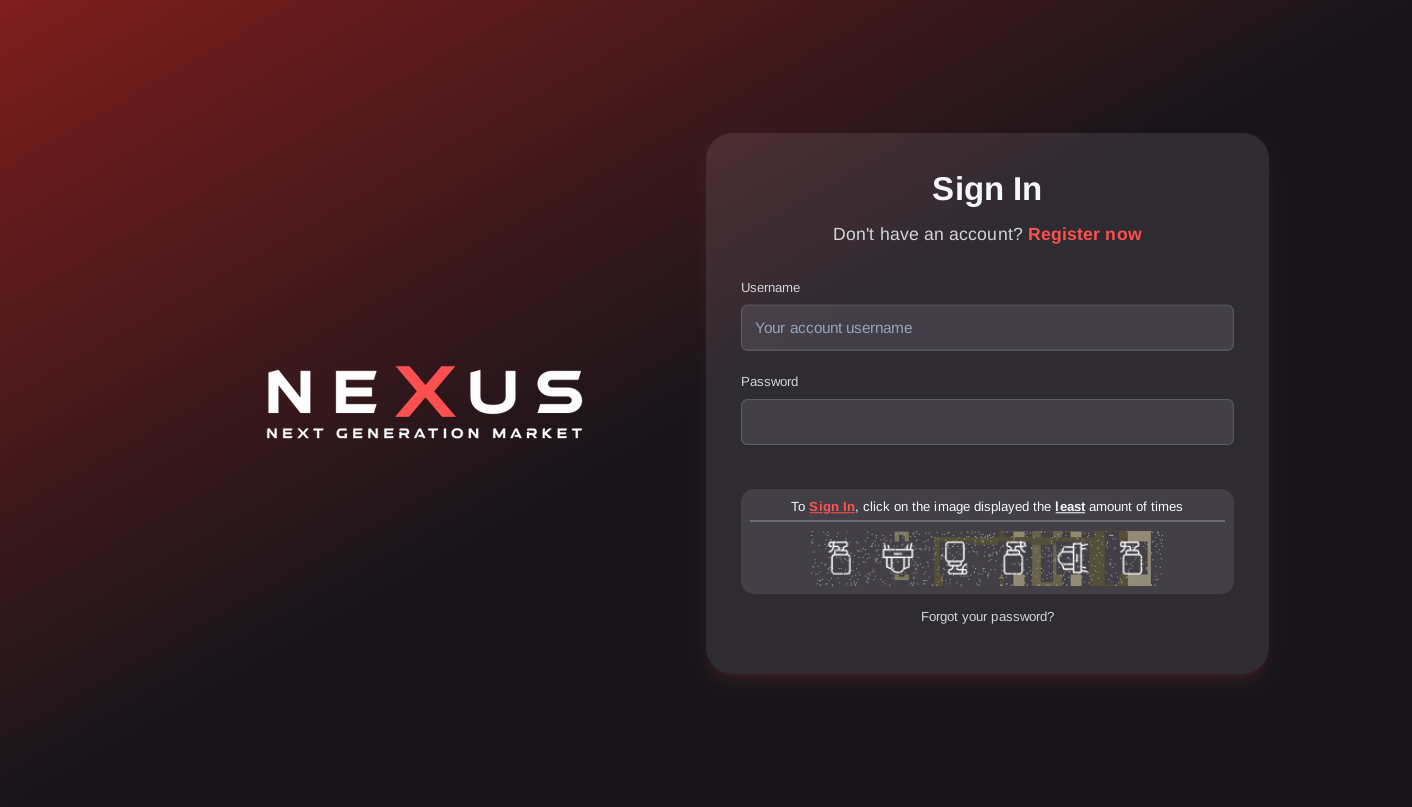
Authentication
The login interface emphasizing minimal data retention. Users are identified by username/password combinations only.
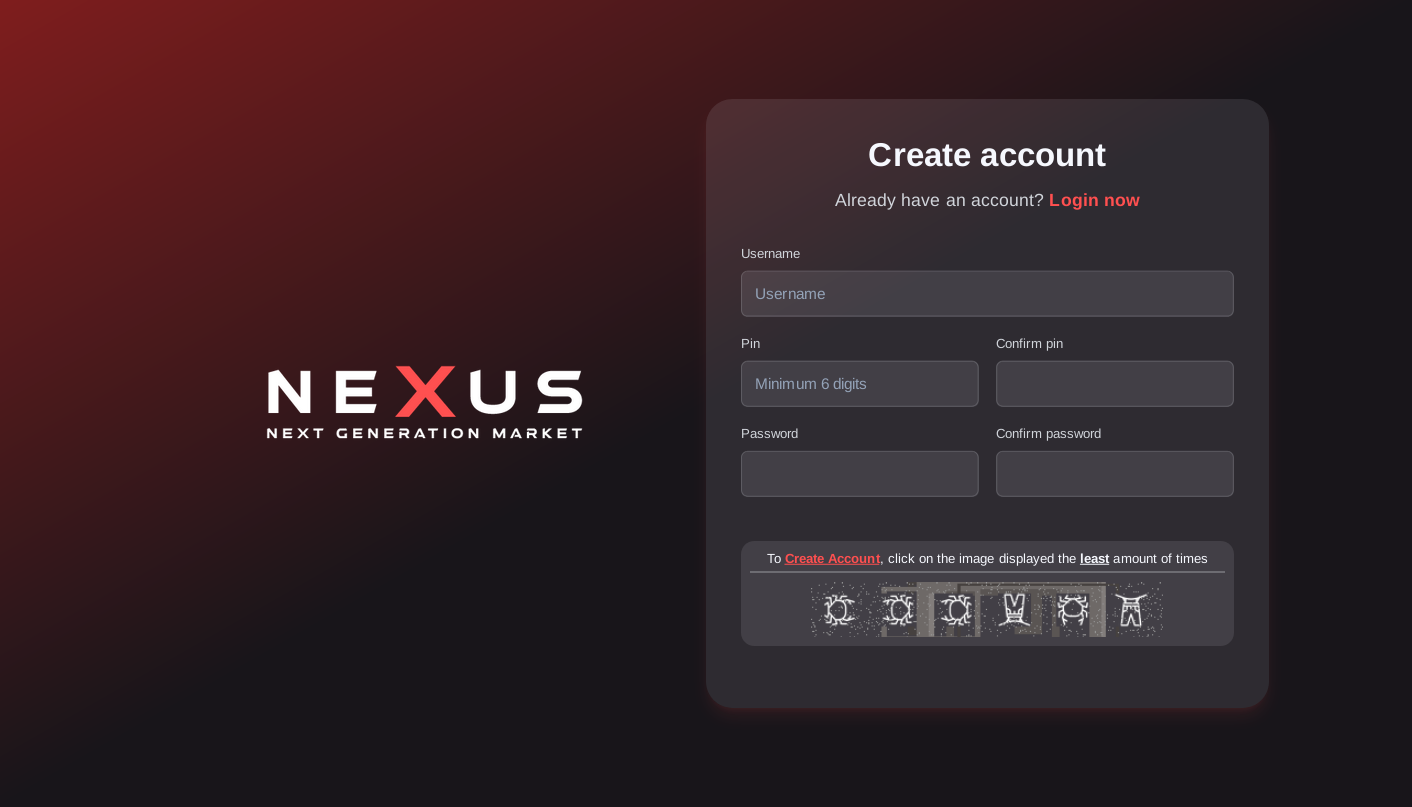
Registration Protocol
Account creation requires a mnemonic generation step. Note the absence of email or personal identification fields.
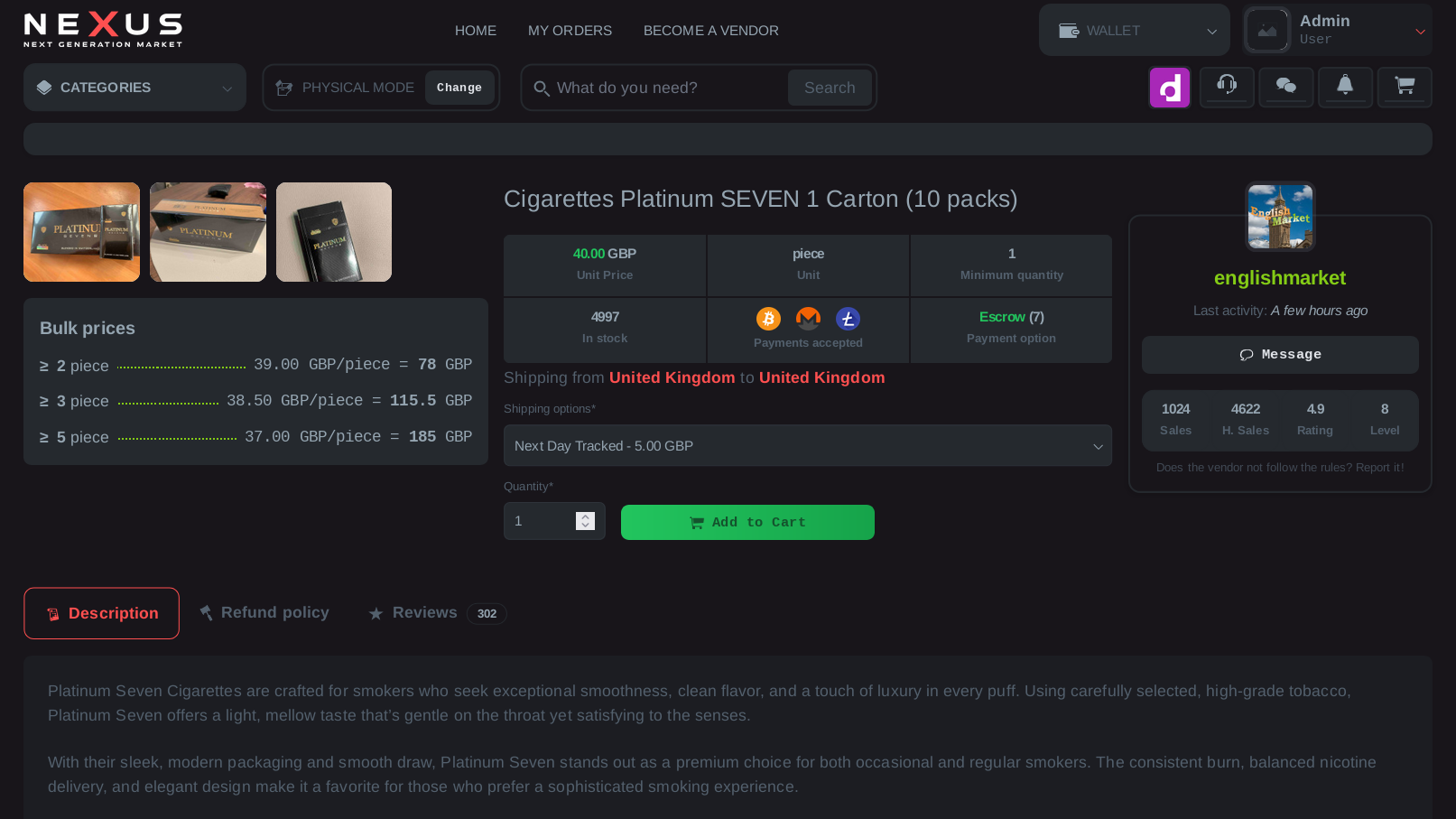
Market Dashboard
The central navigation hub displaying categories, exchange rates (BTC/XMR), and notification alerts.
Operational Timeline
Infrastructure Scaling
In response to increased traffic from migrating users, Nexus deployed additional mirror nodes and enhanced its load-balancing architecture. The introduction of dynamic mirror rotation significantly reduced latency.
Walletless System Integration
A major update shifted the payment model from a centralized wallet system to a per-order generated address system (Walletless Pay). This allows users to pay invoices directly, reducing the risk of funds being held in a central market wallet.
Initial Launch
Nexus Onion Link was established as a boutique marketplace focusing on digital goods and security. The initial rollout prioritized Monero integration and PGP 2FA as mandatory defaults for vendors.
Vendor Verification
Unlike many predecessors, Nexus does not currently require a mandatory vendor bond for established vendors migrating from other platforms with verifiable PGP keys. New vendors, however, undergo a strict vetting process.
Data Retention Policy
Technical analysis suggests that transaction logs are retained only for the duration of the escrow/dispute window. Once a transaction is finalized, metadata is purged from the active database to ensure forward secrecy.